
法国朗斯卢浮宫分馆公园内的“中国花园”是怎么回事?

摄影师侯博文以影像记录了这一“生成中的园林”。他的目光不指向异域风景,而是停留在人如何存在于其中——穿行、驻足、凝视,或被光影所包围的瞬间……
图片来源/Crédit Photo:Internet/网络
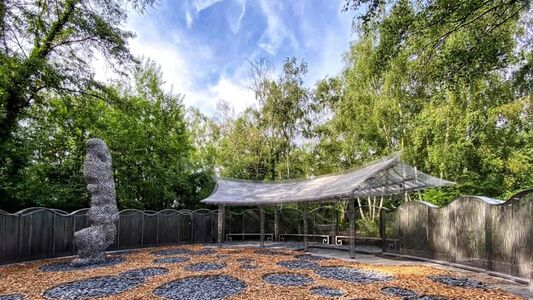
对,您没有看错。在法国朗斯卢浮宫分馆(Louvre-Lens)公园内的的确确地有一座“中国花园”。
这一“中国花园”究竟是怎么回事呢?
它并非一座被复制的“中国花园”。
位于法国朗斯卢浮宫分馆公园内的这一“花园”,名为 Illumination(光之园),由中国建筑师冷天设计,并于2024年7月正式向公众开放。
它诞生于一个跨国合作项目,由法国阿图瓦大学(Université d’Artois)、南京大学与卢浮宫朗斯分馆(Louvre-Lens)共同发起与实施。这一项目的初衷,并非在法国重建一座传统中国园林,而是通过当代建筑语言,在欧洲语境中重新思考“中国园林”的空间观念与感知方式。
因此,这里不再有亭台楼阁的再现。
园林被转化为一种可被行走与体验的结构:路径、光线、视线与时间,共同构成一个开放的空间装置,使人与环境之间的关系在行走中不断被重组。
摄影师侯博文以影像记录了这一“生成中的园林”。他的目光不指向异域风景,而是停留在人如何存在于其中——穿行、驻足、凝视,或被光影所包围的瞬间。
从空间尺度上看,它属于小尺度景观单元,更接近一个可被行走与体验的空间片段,而非大体量园林。
这是一座被“翻译”的中国花园:它在欧洲生成,并在经验之中持续完成。
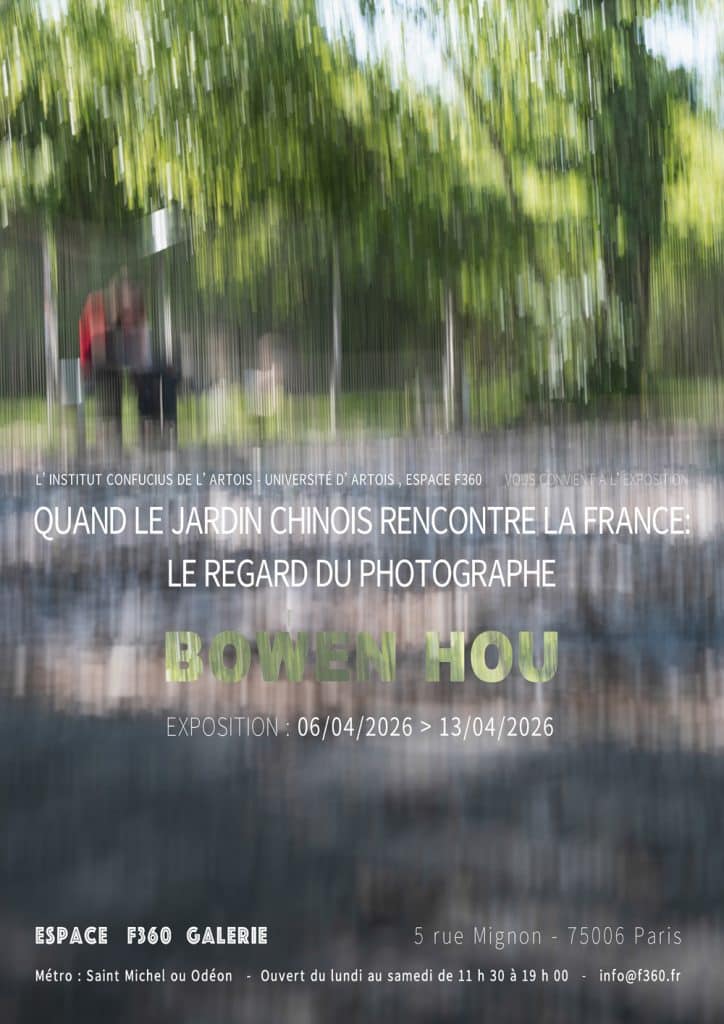
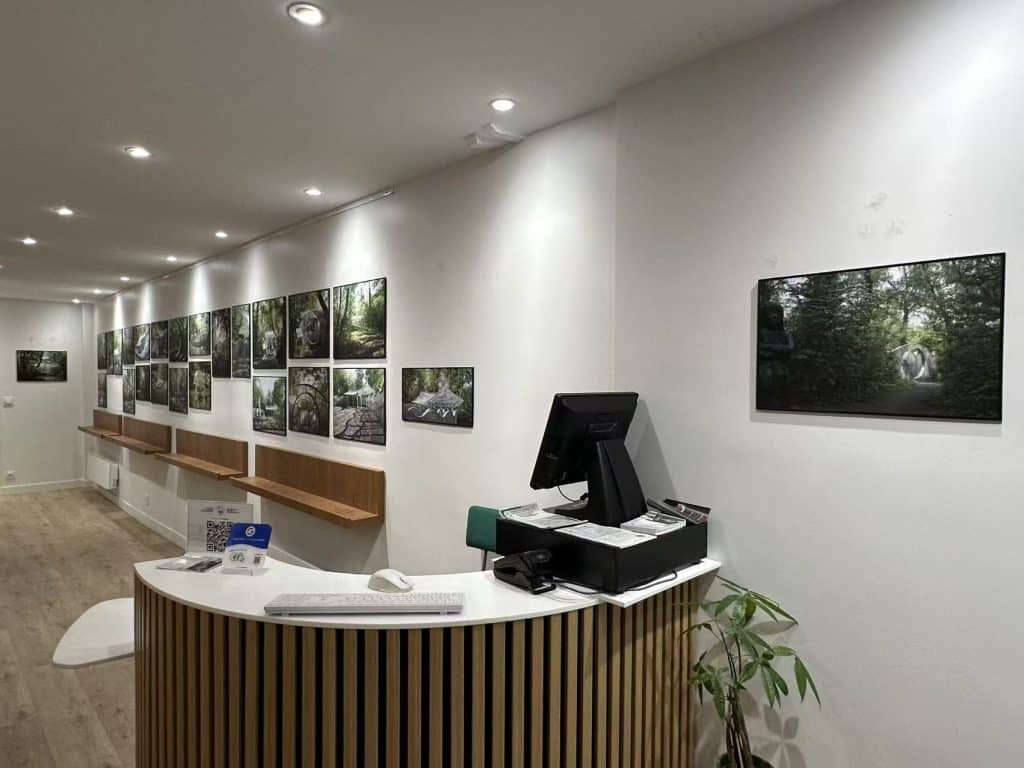
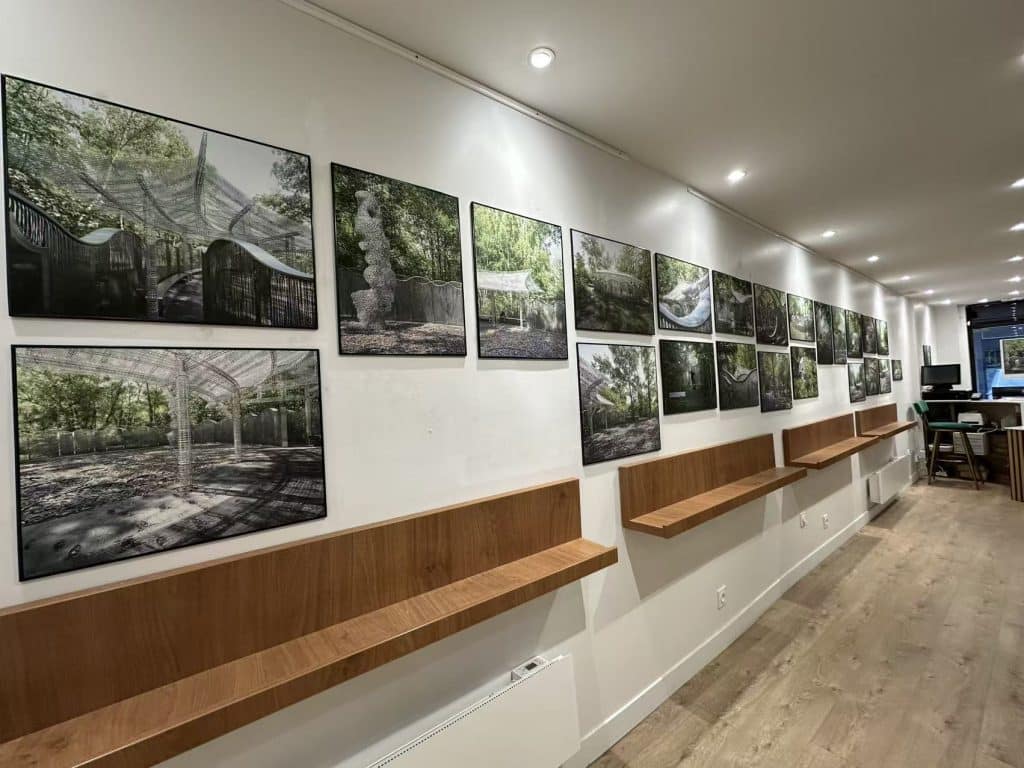
2026年4月6日至4月13日,摄影师侯博文的法国朗斯“中国花园”摄影展将在巴黎“可爱街5号”Espace F360空间画廊展出。
Qu’est-ce que le « jardin chinois » dans le parc du Louvre-Lens ?
Ce n’est pas un « jardin chinois » reproduit.
Situé dans le parc du Louvre-Lens, ce jardin intitulé Illumination a été conçu par l’architecte chinois Leng Tian et ouvert au public en juillet 2024.
Issu d’un projet de coopération entre l’Université d’Artois, l’Université de Nankin et le musée du Louvre-Lens, il ne s’agissait pas de reconstituer un jardin traditionnel chinois, mais de repenser, dans un contexte européen, les principes spatiaux et perceptifs du jardin chinois à travers un langage architectural contemporain.
Ici, nul pavillon ni décor hérité.
Le jardin devient une structure à parcourir : trajectoires, lumière, lignes de regard et temporalité composent un dispositif ouvert où la relation entre l’homme et son environnement se reconfigure dans l’expérience du déplacement.
Le photographe Hou Bowen en capte les traces. Son regard ne cherche pas l’exotisme, mais observe les modes de présence — traverser, s’arrêter, contempler, ou se laisser envelopper par la lumière.
Par son échelle, il relève d’un dispositif paysager de petite dimension, davantage proche d’un fragment d’espace à parcourir que d’un jardin de grande ampleur.
C’est un jardin chinois « traduit » : il se forme en Europe, et s’accomplit dans l’expérience.
Hou Bowen (1981–)
Photographe d’architecture chinois, formé à l’Université de Nankin, ancien architecte devenu photographe et cinéaste.
Son travail s’ancre dans l’intention initiale des architectes, explorant les relations entre espace, site et usages, entre documentaire et dimension poétique. Il observe le temps et les modes d’habiter, révélant l’inscription de l’architecture dans son environnement contemporain.
Infos pratiques :
Exposition : « Quand le jardin chinois rencontre la France : le regard du photographe HOU Bowen »
Du 6 avril au 13 avril 2026
Espace F360 Galerie
5 rue Mignon – 75006 Paris
图片来源/Crédit Photo:Espace F360 Galerie
侯博文(1981—)
中国建筑摄影师。毕业于南京大学建筑学系,曾从事建筑设计,后转向摄影与影像创作。
其作品立足建筑师的原初意图,从空间、场地与人的使用中提炼观念,在纪实与诗性之间展开表达。通过对时间与使用的观察,呈现建筑在当代环境与城乡景观中的存在方式。
图片来源/Crédit Photo:Espace F360 Galerie
摄影师侯博文眼中的法国朗斯“中国花园”
(文/侯博文)
2025年4月24日,我和邢敏两个人从中国南京来到朗斯,与中国花园的相遇,是一次特殊的体验:具身与叙事、翻译与反转、显与隐。
叙事特征与文学性
这次的工作是照片和视频同步拍摄的,所以正在展出的照片对我而言更像是我拍摄的视频中定格的画面。因此,其中的一些照片仿佛是按照符合逻辑的顺序排列在时间线上,这使它们具有着向前或向后的叙事延伸感。给予画面这种想象空间对我来说非常重要,它可能会让不同的观者产生不同的情绪,也可能让观者看到比画面更大的世界。我把这些称之为画面的生命力。
拍摄结束以后,这些照片也作用于着我对视频的剪辑,每一张照片都像是一个节点,我通过重新排列照片来完成对视频里面的时空关系的重新营造。
我基本上每天从早晨到傍晚公园关闭之前都尽可能在“中国花园”里,随着时间的积累,越来越多的场景都在我的意料之内,但不确定性也始终存在:小朋友在这里执迷于捡拾地上的瓦片扔到屋顶;少年们追逐着从金属丝网构筑的半透明云墙后面鱼贯而入又匆匆离去,仅留下刚刚拨动的金属丝网的余震在地面上形成如同涟漪般的动态光影;上午经过这里的中年女士下午又从反方向走来并告诉我今天是去探望了她的母亲;情侣坐着不锈钢的“平几”分享着一块披萨以及谈天说地;一群画画的女孩席地而坐,描摹着用不锈钢格构模拟的“冠云峰”如入无人之境。经过这里的所有人都有属于自己的故事,也都为影像注入一丝情节和可读性,我通过抓拍他们将文学性带入建筑摄影作品。这些日常美好且令人感动,我摄取恰当的瞬间凝固这美妙的氛围,试图将上述的感动放大,希望以此帮助建筑师表达他在其中投入的温情。
复合的具身体验
在拍摄中的某一天,我们去朗斯北郊两座煤矸石堆成的山丘勘景,从轻松柔美、绿树掩映的“中国花园”一路步行过来,废弃的煤矸石大山呈现出的粗粝和压抑愈发明显。此后,每天往返拍摄地与住所的路上,都会不自觉地远眺两座煤矸石大山,又会想起当天感受到的“中国花园”与煤矸石大山之间的反差。这些构成了我在沉重与安宁之间的反复穿梭的复合体验。当我回看我拍摄的“中国花园”的照片,我认为这种复合体验隐性地让我在拍摄的时候保持着一种思虑与追求,就是未来的观者能否对画面里的人物和空间体验产生移情或共情。
我希望我拍到的人物在画面里的活动能让观者感觉到是自己在“中国花园”里游走,从而形成一种心理上的牵引,引发人们对于空间的好奇和想象。
多重的转译
建筑师冷天在“中国花园”的设计中提出的策略是用当代的材料和技术手段对中国古典园林实行创新转译。
拍摄建筑也可以说是从建筑到影像的转译过程。那么拍摄“中国花园”,可以说是对古典园林的转译再转译。
这种多重的转译,既给我们的拍摄增添了可思辨和玩味的有趣成分,又暗含着在转译中迷失和误读的风险。
身份的反转
“中国花园”的设计理念来自于东方,相对于朗斯,花园界定出来的场所具有一种外来者的气质。
但当周围的居民进入“中国花园”,环顾四周的景象,居民们反倒暂时地成为了外来者。
在朗斯,我是外来者,但进入“中国花园”,我又因为一致的文化背景,短暂地脱离了外来者的体验。
日复一日反复进出“中国花园”,这种主客身份的频繁切换,夹杂着他乡遇故知般的感怀,也促使我在拍摄过程中去思考:应该用什么去锚定自我?
而如果正巧你是一位西方的观者,当你此刻看向一位东方摄影师拍摄的建造在西方地理环境中的东方装置的时候,你品味到了什么呢?
Version anglaise (Texte de HOU Bowen)
On April 24, 2025, Xing Min and I traveled from Nanjing, China, to Lens. Our encounter with the Chinese Garden was a singular experience:
Embodiment & Narrative, Translation & Reversal, Visible & Invisible
Narrative Traits and Literariness
This body of work was created with simultaneous photography and videography, so the exhibited photographs register with me more as frozen frames excerpted from the videos. As such, some of these images are arranged along a timeline in a logical sequence, endowing them with a sense of narrative extension that unfolds either forward or backward in time. Granting such imaginative space to the frames is of great importance to me: it may evoke distinct emotions in different viewers and even let them perceive a world beyond the imagery itself. I call this the vitality inherent of the frame.
After the shoot, these photographs also informed my video editing process—each photo acts as a nodal point, and by rearranging them, I re-construct the temporal and spatial relationships within the videos.
For the most part, I spent every day in the Chinese Garden from morning until the park closed in the evening. As time passed, more and more scenes appeared as I expected, yet the unpredictables always remained: children engrossed in picking up shards of tile from the ground to hurl at the roof; teenagers darting in single file from behind the translucent Undular Wall made of stainless steel mesh, then hurrying away, leaving only the faint reverberations of the just-touched mesh to cast rippling, dynamic light and shadow on the ground; a middle-aged lady who passed by in the morning walking in the opposite direction in the afternoon and telling me she had visited her mother that day; a couple sitting on the stainless steel Flat Bench, sharing a slice of pizza and lost in free-ranging conversations; a group of young female artists sitting on the ground, sketching the Cloud-Capped Peak recreated with stainless steel lattice, absorbed in their craft, oblivious to the world around them. Every person who passed through this space carries their own story, and each one infuses the imagery with a touch of plot and readability. By capturing these fleeting moments, I bring literariness to architectural photography. These everyday moments are beautiful and moving; I seize the right instants to freeze this wonderful atmosphere, seeking to amplify such emotions and in doing so, help the architect express the warmth he has imbued in this space.
Compound Embodied Experience
We scouted two hills of coal gangue on the northern outskirts of Lens one day during the shoot. Having walked all the way from the softly graceful, tree-fringed Chinese Garden, the ruggedness and oppression exuded by the abandoned coal gangue mounds grew more palpable. After that, on my daily commute between the shooting location and accommodation, I would find myself gazing out at those two mounds unconsciously, and the stark contrast I’d felt that day between the Chinese Garden and the coal gangue hills would come flooding back. These moments came together to form my composite embodied experience—an unceasing movement between heaviness and serenity. Looking back at my shots of the Chinese Garden, I find this nuanced experience implicitly guided a steady thought and pursuit in my shooting: whether future viewers could connect empathetically with the people and spatial experiences in the images.
I hope the movements of the people I photographed in the frames will make viewers feel as if they themselves are wandering through the Chinese Garden, thus creating a psychological pull that stimulates their curiosity and imagination about the space.
Multiple Translations
The design strategy proposed by architect Leng Tian for the Chinese Garden lies in an innovative translation of classical Chinese gardens through contemporary materials and technical approaches.
Photographing architecture can be described as a process of translation from architecture to imagery. In this sense, photographing the Chinese Garden is a re-translation of the classical garden’s original translation.
This layered translation not only endows our shooting with a fascinating vein of critical thinking and playful explorationbut also implies an inherent risk of disorientation and misinterpretation in the act of translation.
Reversal of Identity
The design philosophy of the Chinese Garden originates from the East. Relative to Lens, the space defined by the garden carries an innate quality of otherness.
Yet when local residents step into the Chinese Garden and gaze at the scenes around them, they, in turn, become the outsiders—if only temporarily.
In Lens, I am an outsider. But upon entering the Chinese Garden, I am briefly freed from this experience of otherness, bound by a shared cultural heritage.
Passing in and out of the Chinese Garden day after day, this frequent oscillation between host and guest, intertwined with the pathos of finding a familiar haven in a foreign land, compels me to ponder during the shooting: what is it that anchors one’s sense of self?
And if you happen to be a Western viewer, as you look now at this Eastern installation built in a Western geographical context, captured by an Eastern photographer—what anchors your perception of it?
Hou Bowen
Born: October 1981
Nationality: Chinese
Education & Qualification : Master of Architecture, Nanjing University | Class 1 Registered Architect China
With a foundation in architectural design, Hou Bowen brings a uniquely dual perspective to his practice. From 2008 to 2013, he worked as an architect at the Institute of Architecture Design & Planning Co., Ltd., Nanjing University, before transitioning to a dedicated career in architectural photography and film.
His background in design allows him to deeply grasp the guiding role of conceptual thinking in architecture, as well as the diversity of design approaches. His photographic and cinematic work is rooted in the original vision of the architects he collaborates with: on-site, he draws out design concepts from spatial forms, site contexts, urban fabric, and human behavior, translating them into layered expressions that range from objective documentation to poetic, emotional resonance.
Beyond capturing form, Hou acts as an observer of time and use, capturing how people inhabit architectural spaces. His work reveals how buildings weave into the contemporary architectural environment and the broader rural-urban landscape, inviting viewers to sense the depth of time within each frame.
图片来源/Crédit Photo:Espace F360 Galerie
展讯:
展览: “(法国朗斯)中国花园:摄影师侯博文的目光”摄影展
(由法国阿尔多瓦大学阿尔多瓦孔子学院策划组织)
展期:2026年4月6日至4月13日
地点: 巴黎Espace F360空间画廊
5 rue Mignon – 75006 Paris
开放时间:周一至周六11点30至19点
以下为本站广告
未经书面授权,不得转载。
申请书面授权请联系:
[email protected]
或微信号:
PietonDeParis